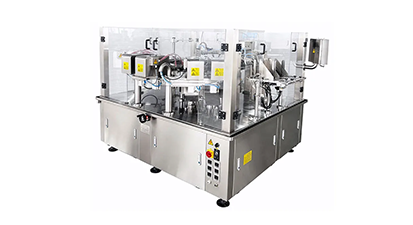
The global flexible packaging market is undergoing a silent but profound structural shift. According to a mid-2026 report by Smithers, the demand for pre-made pouch formats—particularly stand-up and spouted pouches—has grown by over 12% annually, driven by consumer preference for convenience and premium branding. However, the machinery filling these pouches has not kept pace equally. A deep dive into recent production data reveals a decisive move: brands are abandoning intermittent motion systems for continuous rotary pouch packing equipment.
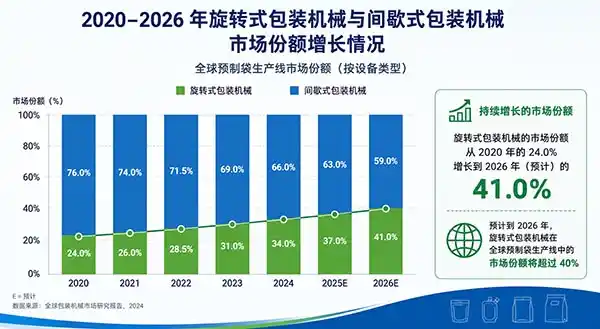
Why this sudden acceleration? The answer lies in the total cost of ownership (TCO) and line efficiency. For years, manufacturers tolerated slower, linear systems because they had lower upfront costs. But with labor costs rising globally and e-commerce demanding shorter lead times, the math has changed. Rotary designs, which use a continuous carousel motion, eliminate the “stop-and-go” waste. This single mechanical advantage allows a single operator to achieve outputs previously requiring two or three linear machines.
Consider a standard production scenario for high-runner SKUs like pet food or liquid detergents. A linear system might top out at 50-60 bags per minute (BPM) with significant wear on the grippers. In contrast, modern automated rotary systems consistently operate at 80-120 BPM with higher positional accuracy. One major Southeast Asian contract packager recently reported a 35% reduction in per-unit labor cost and a 22% decrease in film waste after switching their entire snack line to a rotary platform. This is not an outlier; it’s becoming the industry benchmark.
Three critical factors are accelerating this market share change, which any packaging engineer or plant manager should evaluate for their 2027 CapEx plan.
1. Energy Efficiency and Carbon Footprint
Newer rotary platforms integrate servo-driven turrets that consume up to 30% less energy compared to pneumatic-heavy linear models. This aligns with the growing corporate requirement for Science Based Targets initiative (SBTi) compliance. For brands reporting ESG metrics, replacing two low-efficiency lines with one high-speed rotary equivalent directly reduces Scope 2 emissions from the packing hall.
2. Quick-Change Flexibility for Short Runs
The old criticism that rotary machines are only for long runs has been invalidated. Advanced designs now feature tool-less changeover systems. A team can switch between a 6-inch wide stand-up pouch and a 12-inch flat bottom pouch in under 15 minutes. This capability allows co-packers and major brands alike to respond to just-in-time retail orders without sacrificing uptime.
3. Downtime Reduction through Predictive Maintenance
Where legacy systems rely on reactive fixes, rotary platforms are increasingly integrated with IIoT sensors. These systems monitor the tension on the sealing jaws and the alignment of the zipper track in real time. The result is a shift from “run-to-fail” to predictive maintenance, reducing unplanned downtime by an average of 50%, based on data from a 2025 PMMI report.
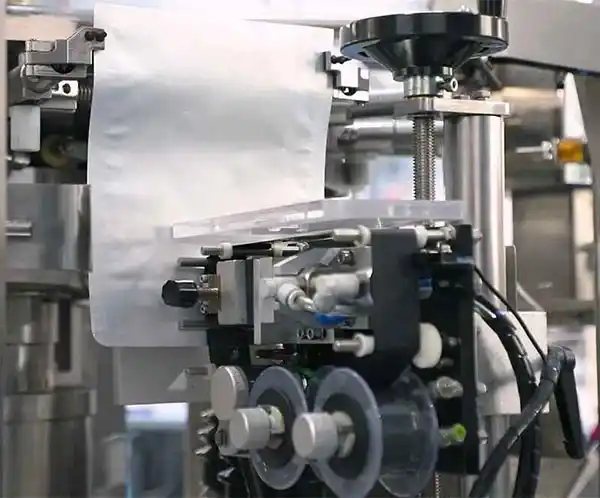
Not every line needs a high-speed rotary. However, data shows the tipping point occurs when your daily SKU output exceeds 30,000 pouches or when your product is sensitive to vibration. For these applications, the gentle, continuous motion of a rotary design preserves product integrity better than the jerky start-stop of a linear indexer.
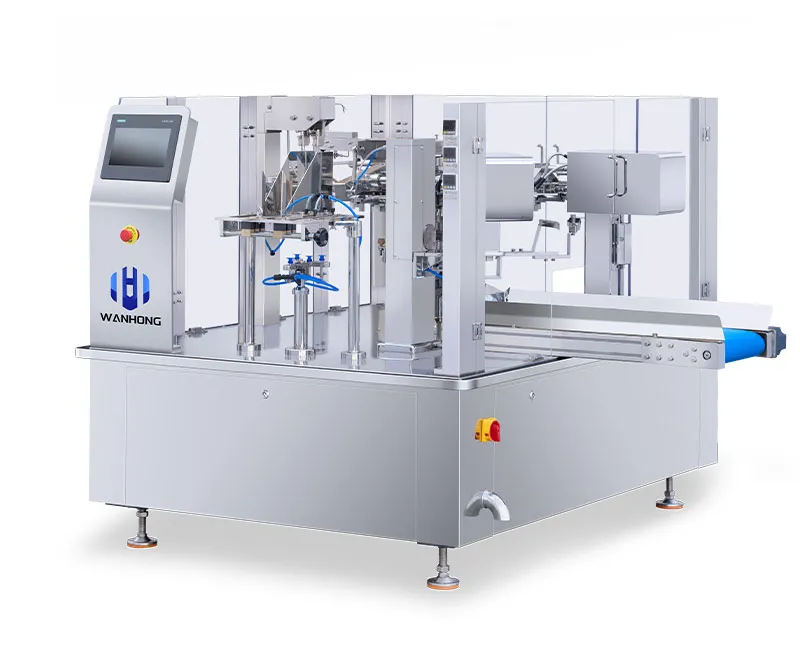
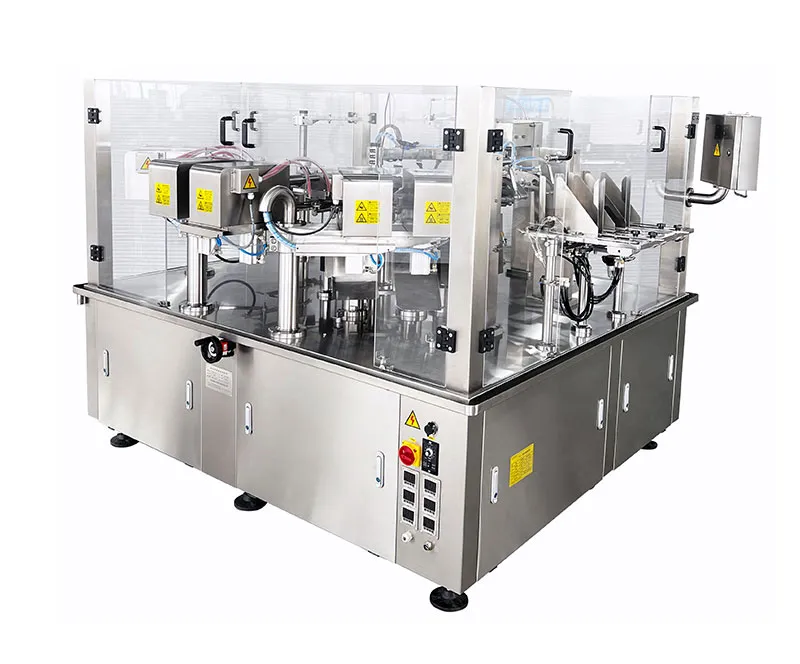
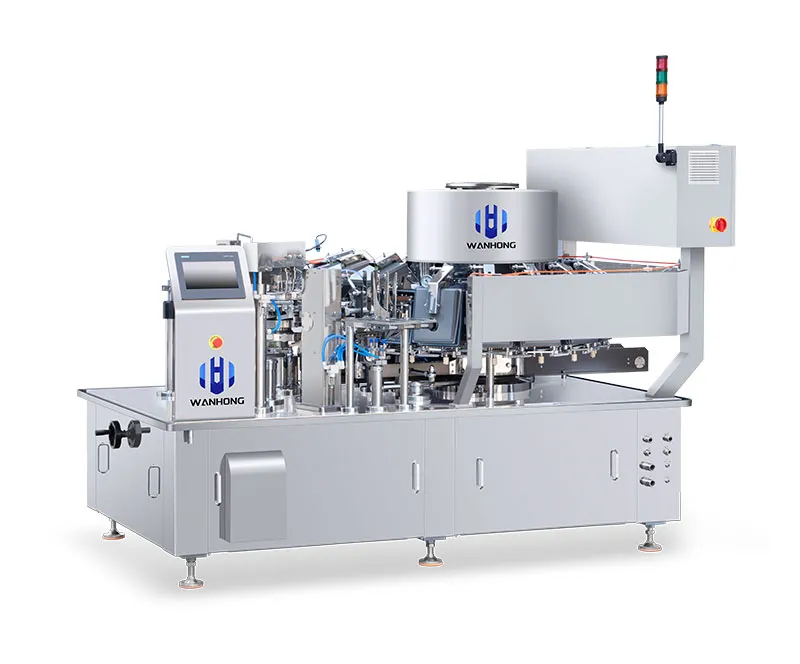
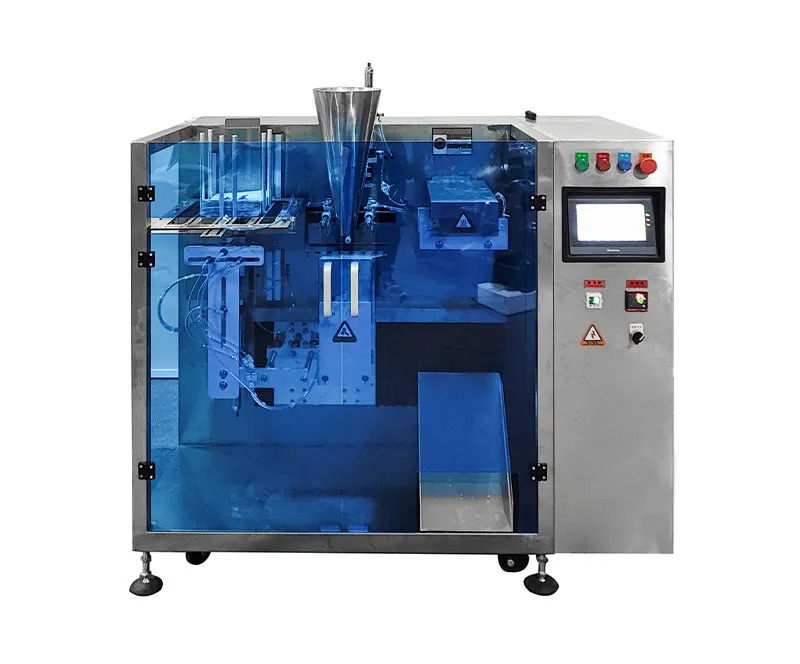
For operations needing high-speed reliability, understanding the specific engineering of the filling station is critical. The most effective solutions integrate servo-driven volumetric fillers that communicate directly with the rotary timing screw. If you are evaluating options for a new snack or pet food line, you can explore more about this technology directly from a builder that specializes in this seamless integration.
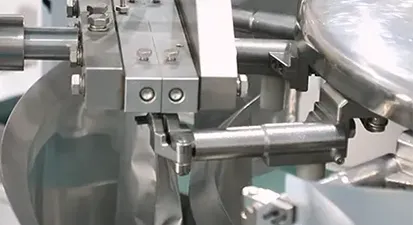
A common mistake is purchasing a machine based solely on BPM specs without auditing the “pouch handling zone.” Look for systems that use cam-driven grippers rather than spring-loaded ones. Spring grippers lose tension over time, causing dropped pouches at high speed. Cam-driven mechanisms, conversely, maintain consistent force regardless of speed, ensuring that a stand-up pouch's gusset opens fully every cycle for reliable filling.
The shift is not uniform globally. In North America and Europe, the demand is heavily driven by the organic and superfood sectors, which use complex pinch-bottom pouches that require precise sealing temperature control. In the Asia-Pacific region, the primary driver is the sheer volume of instant noodle and sauce sachets being packed into pre-made formats.
This regional diversity means a “one-size-fits-all” rotary machine is a myth. The best equipment is modular. For instance, a soup packer needs a robust spout insertion module, while a coffee packer requires a one-way degassing valve applicator. Therefore, when scoping a project, it’s better to find a supplier willing to customize the sealing and filling modules rather than accepting a standard configuration. You can get specific configuration advice for your product's viscosity and pouch type to ensure you are not overpaying for unnecessary features or missing critical ones.
Looking ahead, the market for rotary pouch equipment is expected to grow at a CAGR of 8.5% through 2030. The next frontier is full line integration, where the rotary packer communicates directly with the case packer and palletizer. We are already seeing early adopters use the data from their rotary packing line to adjust upstream filling parameters automatically, creating a closed-loop production system.
For plant managers, the strategic takeaway is clear: treating the packing line as an isolated cost center is obsolete. The rotary machine is becoming the “brain” of the packaging line. The ability to connect its OEE data to an MES is no longer a luxury but a necessity for factories aiming for Industry 4.0 status.
If your current output is constrained by changeover times or if your downtime costs are rising, the market data suggests now is the time to recalculate ROI with a rotary platform. See how leading producers are achieving this level of automation by reviewing case studies from manufacturers who have successfully navigated this transition. The shift from linear to rotary is not just about speed; it is about building a packaging operation that is resilient, data-driven, and ready for the next generation of sustainable, complex pouch designs.
Finally, always request a factory acceptance test (FAT) using your actual film and product. A machine that performs perfectly on the supplier’s standard packaging material may fail on your high-barrier, reverse-printed structure. A reputable rotary machine builder will insist on this test to validate the sealing integrity at target speeds. For a hands-on evaluation, you can explore a rotary solution optimized for high-barrier films to see the difference in real-time before making a capital commitment.

bags/min
g
mm
bags/min
g
mm
bags/min
g
mm

 中文
中文 English
 Pусский
 Français
 Español