When you run a pre-made pouch packing line, the daily reality involves hundreds of machine cycles, material tracking, quality checks, and changeovers. Many operators focus on mechanical uptime—but the real bottleneck often hides in data flow. How do you log every batch? How do you sync production counts with inventory? And when something goes wrong, can you trace it back to a specific shift, operator, or component?
That’s where an ERP system enters the picture. But not every ERP works well with automated packaging equipment. Selecting the wrong one can create more manual entry work, not less. This article walks through a practical framework to help you choose an ERP that actually fits a pre-made pouch line—without getting lost in vendor buzzwords.
Most ERP selection guides start with features like inventory or accounting. That’s backward. Start on the factory floor. Walk your pre-made pouch line from film feeding to case packing. At each stage, ask: what data is generated? Where does it currently go? How is it entered?
Typical touchpoints include:
Film roll consumption
Pouch forming or feeding counts
Fill the weight from each lane
Seal temperature and pressure
Reject counts by defect type
Carton count and pallet ID
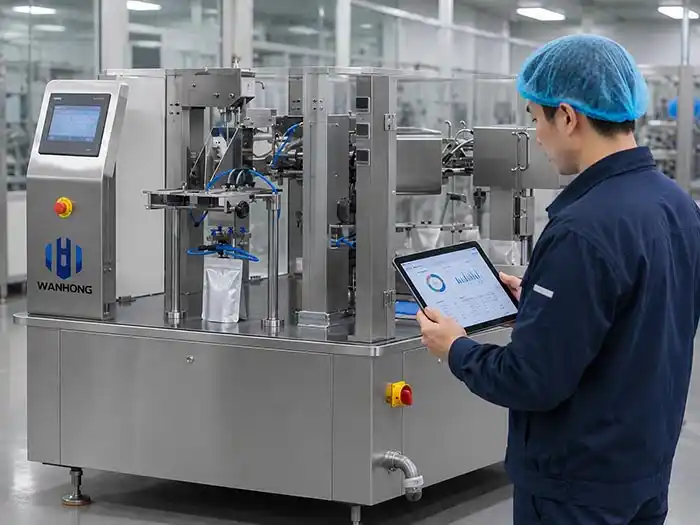
If your ERP cannot automatically capture these data points—or forces operators to type them in at a terminal—you will see errors and resistance. Look for ERPs that offer APIs or middleware to connect with automated pouch packing equipment that already features SCADA or OPC UA outputs.
Common mistake: Buying an ERP first, then trying to retrofit data collection. Always reverse the sequence.
Many traditional ERPs were built for discrete manufacturing with daily or shift-based reporting. A modern pre-made pouch line runs at high speed, and small deviations can produce hundreds of kilos of waste before a shift ends. You need real-time or near-real-time visibility.
Ask potential ERP vendors:
Does your system support live OEE dashboards?
Can it display the current line speed, efficiency, and reject rate against the target?
Will it trigger alerts when a parameter exceeds control limits?
If they hesitate, move on. Real-time data is not a luxury—it’s how you reduce unplanned downtime. Consider integrating with high-performance pouch filling systems that natively generate time-stamped production logs. This simplifies ERP integration because the data structure is already clean.
For food, pharmaceutical, or cosmetic pouches, traceability is non-negotiable. You need to link raw material lot numbers to finished case codes. If a supplier’s film is later found defective, you must recall specific time windows.
A suitable ERP for a pre-made pouch line should support:
Bi-directional traceability: from inbound material to outbound case, and vice versa.
Electronic recipe management: store seal temperature, fill volume, and film tension settings for each SKU. When you change over, the ERP should push the correct recipe to the machine’s HMI.
Digital logbooks: replace paper shift reports with timestamped records.
Some packaging lines use standalone software for these tasks, which then syncs to the ERP. That can work, but it adds complexity. A more elegant approach is to choose integrated pre-made pouch packing machinery that already exports structured data in JSON or XML, compatible with most modern ERPs.
ERP vendors often quote a low base price, then add surprise costs for APIs, custom fields, or third-party connectors. Before signing, get written answers to:
Does your standard package include a REST API?
What is the cost per additional API call or per connected device?
Do you pre-integrate with any automation hardware?
A rule of thumb: if the ERP charges per machine connection, calculate the total for your line. You may find that a mid-tier ERP with open APIs and flat-rate device connections offers better long-term value than a “big name” system with usage-based fees.
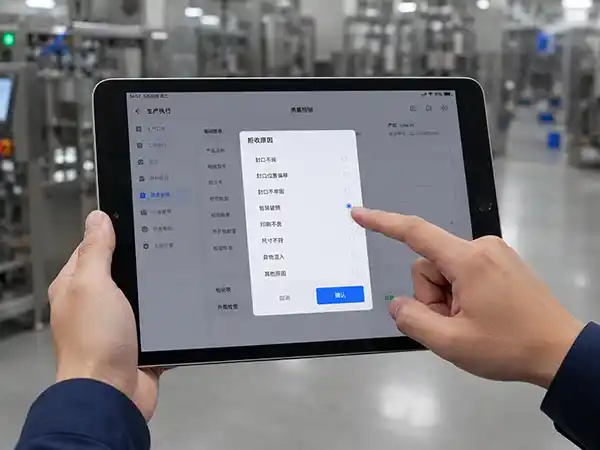
Also, test the user interface on the factory floor. Give a line operator a tablet and ask them to record a rejected pouch in the ERP demo. If it takes more than three taps or 10 seconds, it will fail in practice.
Many pre-made pouch lines run multiple SKUs per day—different sizes, materials, or flavors. Your ERP should support rapid changeovers by:
Storing all parameters for each SKU
Enabling one-click recipe recall from the machine interface
Automatically updating the production order status when a changeover is logged
If your ERP treats each changeover as a manual work order close-and-open, operators will skip steps. Look for ERPs that allow “continuous scheduling” with changeover events embedded.
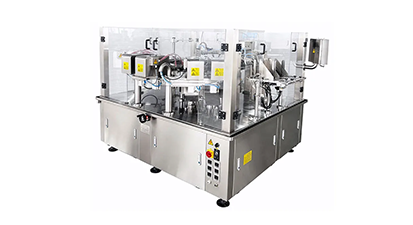
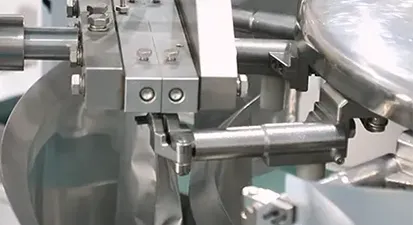
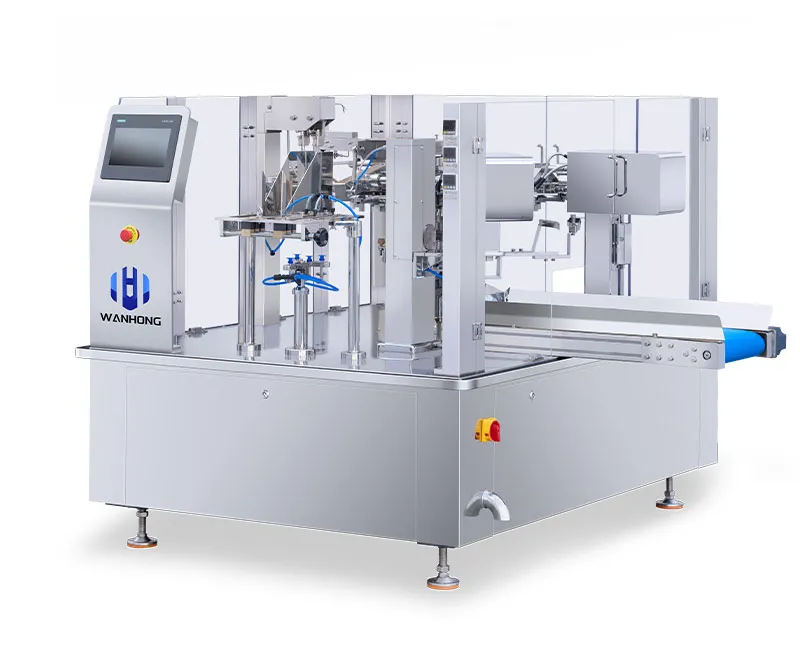
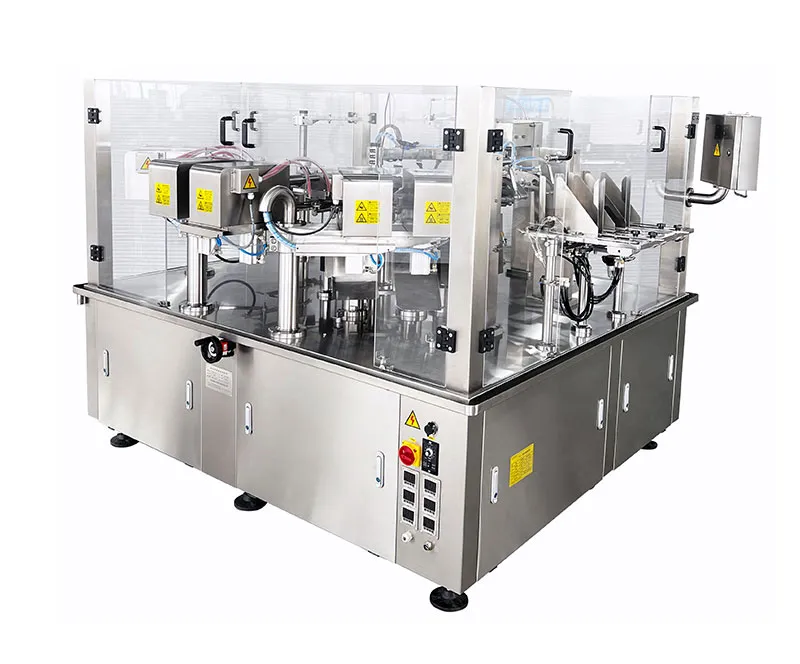
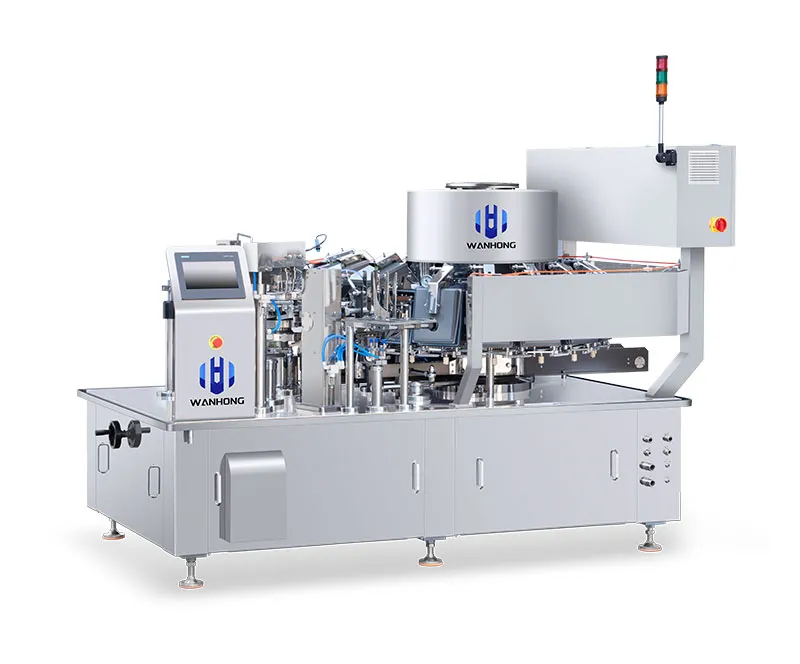
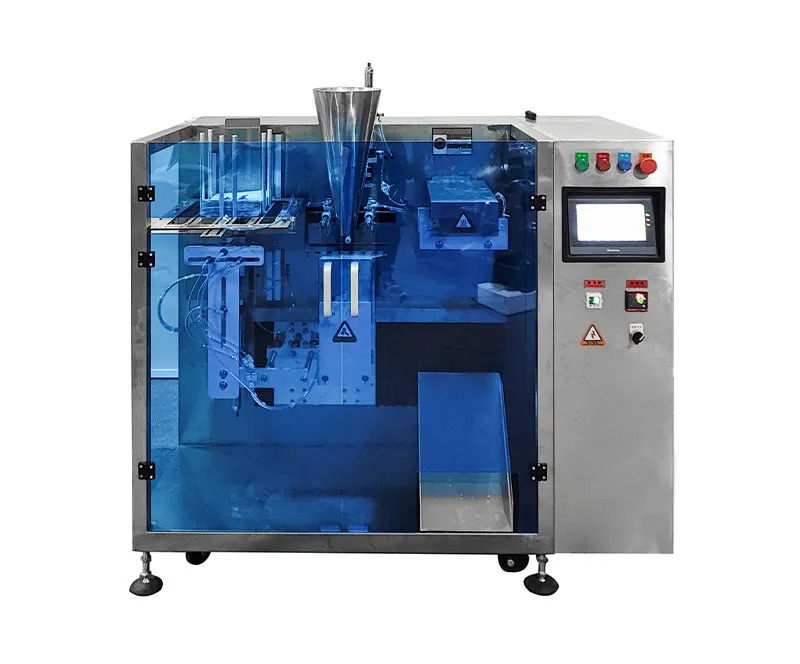
In practice, the physical changeover time depends heavily on the packing machine itself. Rotary Premade Pouch Packing Machine (Note: this is the core term, but we are not linking it here—just once for context in the whole article) designs vary widely; some reduce changeover to under 10 minutes with servo-driven adjustments. An ERP that supports quick recipe changes will maximize that hardware benefit.
Not every pre-made pouch line needs a billion-dollar ERP. Small to mid-sized producers often succeed with modular systems tailored to packaging lines. The key is finding equipment that speaks the same data language as your chosen software.
At Wanhong, we’ve worked with clients who struggled with disconnected ERPs. That’s why our high-speed pouch packing solutions include open communication protocols. You can pull real-time production counts, reject reasons, and operating parameters directly into your ERP—without custom middleware.
If you’re currently evaluating ERPs or planning to upgrade your pouch line, we offer a free compatibility check. Send us your ERP’s API documentation, and we’ll confirm integration feasibility. Or explore our product page to see how our machines simplify data capture: Check integrated pouch packing equipment →
| Criteria | What to verify |
|---|---|
| Real-time data | Live OEE dashboard, alerting capability |
| Traceability | Bi-directional, lot-level, with digital signature |
| Recipe management | Electronic storage + one-push recall to the machine |
| Integration cost | Flat-rate API, no per-device fee |
| Changeover support | Continuous scheduling, changeover event logging |
Choosing an ERP for a pre-made pouch line is not about finding the most expensive system. It’s about finding one that fits your actual floor—where operators are not data entry clerks, and where your packing machine becomes a data source, not a silo.
Note: The images in this article are for reference only.

bags/min
g
mm
bags/min
g
mm
bags/min
g
mm

 中文
中文 English
 Pусский
 Français
 Español